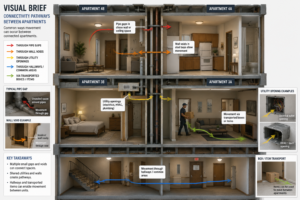
You can’t inspect your neighbor’s kitchen. You can’t make the unit below you fix its leak. You can’t stop the building from being a building, full of shared pipes and thin walls a roach reads as open road. What you can do is remove every reason a roach would choose your unit over the one next door, and put the building on formal notice for the rest.
That’s the whole German cockroach apartment prevention checklist. Nothing here requires your landlord’s cooperation to start working tonight, and the second half tells you exactly how to get that cooperation anyway.
German Cockroach Apartment Prevention Checklist: Start at Move-In
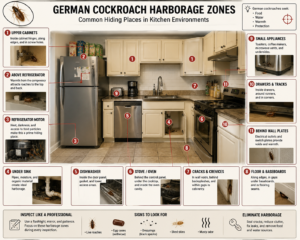
Before you unpack a single box, walk the unit with a flashlight. This is the cheapest prevention you’ll ever do, because it tells you whether you’re inheriting someone else’s problem.
- Pull out the fridge and stove (or get as far behind them as you can) and check for droppings, egg cases, or shed skins. A previous tenant’s infestation leaves evidence even after professional cleaning.
- Check under the sink for water stains, active drips, or soft or swollen cabinet material. Moisture history predicts future problems.
- Look at every pipe penetration, under sinks, behind the water heater, around the dishwasher hose, for gaps wider than a pencil. These are the doors between your unit and the next.
- Open every cabinet and drawer and check the back corners and hinge gaps. Roaches favor cabinet joints over open shelving.
- Photograph anything concerning and email it to property management the same day, dated, before you’re the one who could get blamed for it.
Weekly Habits That Cost You Nothing
These aren’t chores you add to your life. They’re five-minute redirects of habits you already have.
- Dry the sink before bed. A wet sink overnight is a water source available to every roach in the building. Thirty seconds with a towel removes it.
- Take trash out before it’s full, not after. A trash can that’s been accumulating for days is a food source broadcasting itself through the whole kitchen.
- Wipe the stovetop and counter after cooking, not the next morning. Grease film left overnight is exactly what a scavenging roach is built to find.
- Store dry goods in sealed containers, not the bag they came in. Cardboard and thin plastic aren’t a barrier; they’re an invitation and a hiding spot in one.
Monthly: The System That Catches Problems Early
- Place 4 to 6 sticky monitors in the harborage zones you identified on move-in: behind the fridge, under the sink, in the back corners of lower cabinets, along the baseboard shared with a neighboring unit.
- Check and log them on the same day every month. A blank monitor is good news you should still record, it’s your evidence that the unit was clean on that date, which matters if a problem starts later and you need to show it wasn’t always there.
- Re-seal anything that’s opened up. Caulk shrinks, cabinets shift, and a gap that was sealed at move-in can reopen. A monthly glance costs less than a reinfestation.
What Property Management Actually Owes You
Sanitation habits control whether your unit is inviting. They do nothing about the shared plumbing and wall voids carrying activity in from elsewhere in the building. That part isn’t yours to fix, it’s the property’s, and you’re entitled to ask for it in writing.
- Request sealed penetrations at your lease start, not after a sighting. Ask specifically for expanding foam or copper mesh at every visible pipe penetration in the kitchen and bathroom. This is maintenance, not pest control, and most leases already obligate it.
- Ask whether the building has an active pest control contract, and whether it’s unit-by-unit or building-wide. A unit-by-unit contract means your neighbor’s infestation can sit untreated indefinitely unless someone complains, ask what triggers a building-wide response.
- Request move-out inspection data when you can get it. Some property managers will tell you if a unit had a documented pest history. It’s worth one polite email before you sign.
- Put every report in writing, even minor ones. A single emailed sighting seems small. A dated record of three sightings over two months is the evidence that gets a building-wide inspection approved instead of a can of spray handed to a maintenance worker.
The Bottom Line
Prevention in an apartment is a split responsibility, and most residents only ever work half of it. Handle your half with habits that take minutes, not hours: dry the sink, seal what you can reach, monitor on a schedule. Then put the other half in writing and keep asking, because a documented, repeated request is the only thing that reliably moves a property manager from noted to scheduled.
Do both, and you’ve done everything prevention can do. If it still shows up anyway, the full response, what to do once you actually have an infestation in a shared building, is in the guide on German cockroaches in apartments, and the complete system sits in the German Cockroach Field Manual.