The German cockroach does not win because it is big. It wins because it is built for your building. Blattella germanica is a small, tan insect that abandoned the wild thousands of years ago to live in obligate partnership with people. It does not survive in forests or fields. It survives in kitchens, bathrooms, restaurants, hospitals, and transit systems. Anywhere humans generate warmth, water, and food.
It reproduces faster than almost any pest on the planet. It squeezes into gaps the width of a credit card. It reads the air with sensors on its abdomen and triggers an escape reflex in under 50 milliseconds. Before its brain is even involved. And over decades of chemical warfare, it has evolved to detoxify poisons, mutate the receptors those poisons target, and reject the sweet baits meant to kill it.
This is why the shoe, the spray, and the sticky trap keep failing. Each one kills a cockroach. None of them kills the colony. A single missed nymph or one overlooked egg case rebuilds the entire population in weeks. You are not fighting the roach on the floor. You are fighting the breeding operation behind the refrigerator that produced it.
Most people lose this fight for the same reason: they treat symptoms. They see a roach, they react to that roach, and they call it handled when it disappears under the stove. Meanwhile the population that produced it is untouched. Fed, watered, sheltered, and breeding on a 60-to-90-day clock. The homeowners who win do the opposite. They stop counting sightings and start dismantling the conditions that make an infestation possible.
This manual is the complete campaign. It walks you through identifying the enemy at every life stage, mapping where it hides, understanding why it survives conventional attacks, and running a phased eradication that targets its biology instead of your patience, then locking the door behind it so it cannot come back. Read it once to understand the fight. Keep it open while you run the operation.
THE CAMPAIGN, NOT THE KILL COUNT
Eradication is a coordinated operation, not a swatting spree. Every phase in this manual serves one of these objectives:
- Identify the species and confirm the enemy.
- Locate the harborages where they breed.
- Measure population density before you treat.
- Cut off water, food, and shelter.
- Deploy the right chemistry against a resistant target.
- Bait to trigger secondary and tertiary kills inside the nest.
- Rotate chemistry and food matrix to stay ahead of adaptation.
- Seal the borders and monitor until the evidence confirms collapse.
The objective is never to kill every cockroach you happen to see. The objective is to destroy the population producing those sightings, and deny it the conditions to rebuild.
German Cockroach Quick Facts
| Scientific name | Blattella germanica |
| Typical adult size | 13–16 mm (about 1/2 to 5/8 inch) |
| Adult color | Light brown to tan |
| Main identifying mark | Two dark parallel stripes behind the head (pronotal bands) |
| Eggs per case (ootheca) | 30–40, carried by the female until about 24 hours before hatch |
| Development | Egg case → 6 nymph instars (60–90 days) → adult |
| Reproductive ceiling | One female’s line can reach 10,000–30,000 in a year under ideal conditions |
| Preferred harborage | Warm, humid, tight cracks, 1.6 mm (1/16 inch) wide |
| Common locations | Refrigerator compressor bays, cabinet hinges, under-counter lips, electronics, sink cabinets |
| Main activity period | Primarily nighttime |
| Flight ability | Winged but flightless: they run; may glide if startled |
| Main long-distance spread | Human transportation and hitchhiking |
| Major control challenges | Hidden harborages, reproductive speed, insecticide resistance, bait aversion, reinfestation |
| Best overall strategy | Inspection-based Integrated Pest Management |
| Primary objective | Eliminate the breeding population and prevent recovery |
Table of Contents
- What Is a German Cockroach?
- Where Did German Cockroaches Come From?
- How to Identify German Cockroaches
- German Cockroach Behavior and Biology
- Why German Cockroaches Infest Buildings
- The German Cockroach Life Cycle
- How Fast German Cockroaches Reproduce
- Where German Cockroaches Hide
- Evolutionary Armor: Why They Are Hard to Kill
- How German Cockroach Infestations Spread
- Signs of a German Cockroach Infestation
- How to Determine Infestation Severity
- Health Risks and Cockroach Allergens
- How to Get Rid of German Cockroaches: The Counter-Offensive
- Selecting Your Chemistry (IRAC Groups)
- Precision Baiting Tactics
- The 90-Day Bait Rotation Schedule
- Why German Cockroach Treatments Fail
- How Long Elimination Takes
- How to Prevent Reinfestation
- German Cockroaches in Apartments
- When to Call a Professional
- Frequently Asked Questions
- Final German Cockroach Action Plan
- About the Author
- Scientific References
What Is a German Cockroach?
The German cockroach, Blattella germanica, is a small cockroach species bound almost entirely to indoor human environments. Unlike larger cockroaches that live outdoors and occasionally wander inside, German cockroaches are indoor specialists. They are found worldwide inside human-built structures and do not maintain independent populations in nature. Where there are people, heated buildings, and food, they thrive; take those away and they die out.
That single fact shapes everything about how you fight them. Because they depend on your building, the conditions inside your building are your leverage. They are particularly successful in apartments, houses, restaurants, hotels, hospitals, nursing homes, schools, dormitories, grocery stores, food-processing plants, and commercial kitchens. Anywhere that reliably supplies warmth, moisture, and food within reach of a protected hiding place.
Several traits make them the most formidable indoor pest most homeowners will ever face:
- Small, flattened bodies that slip into cracks a coin could not enter and stay pressed inside them out of sight.
- A powerful drive toward warm, protected harborages near food and water, which concentrates them in predictable places.
- Primarily nocturnal activity, so the population you see is a fraction of the population that exists.
- Broad, opportunistic feeding habits: they eat food scraps, grease, glue, soap, toothpaste, and each other.
- Extreme reproductive speed, which lets a handful of survivors rebuild an infestation in weeks.
To understand how those traits work together into a survival system, and how to turn each one against the colony, see the German cockroach behavior and biology guide.
Where Did German Cockroaches Come From?
Despite the name, the German cockroach did not originate in Germany. Genetic research published in 2024 traced the species’ origin to roughly 2,100 years ago in South Asia, where it evolved from a closely related outdoor cockroach and then spread across the globe along human trade and transportation routes. It rode ships, wagons, trains, and eventually trucks and airplanes into every populated corner of the planet.
The lesson buried in that history is the entire premise of this manual. This insect’s success is a direct product of human movement and human habitats. It goes where we go, and it lives how we live. It did not adapt to nature. It adapted to us: our warmth, our plumbing, our pantries, and the tight dark spaces our buildings are full of. That is why sanitation, exclusion, and resource denial are not housekeeping suggestions in cockroach control. They are the strategy. You are removing the specific advantages the species spent two thousand years learning to exploit.
How to Identify German Cockroaches
Before you spend a dollar on treatment, confirm the enemy. Misidentification wastes money and time, because control tactics differ sharply by species. A strategy built for a German cockroach’s indoor breeding colony is the wrong plan for an American cockroach wandering up from a drain. For the full breakdown, see the complete German cockroach identification guide. The tactical identifiers are these:
- Size: Small. 13 to 16 mm, roughly half an inch. Noticeably smaller than the American, Oriental, or smokybrown cockroaches people often confuse them with.
- Color: Light brown to tan, sometimes almost golden.
- The twin stripes: The definitive mark is a pair of parallel dark longitudinal stripes (pronotal bands) running down the shield just behind the head, from the back of the head toward the base of the wings. If you remember one feature, remember the two stripes.
- Wings: Adults have fully developed wings but cannot truly fly. They may glide briefly from a high shelf if startled, but their real defense is speed on foot.
- Shape: Flat and oval, built to slide into and hide inside narrow gaps.
German Cockroach Nymphs
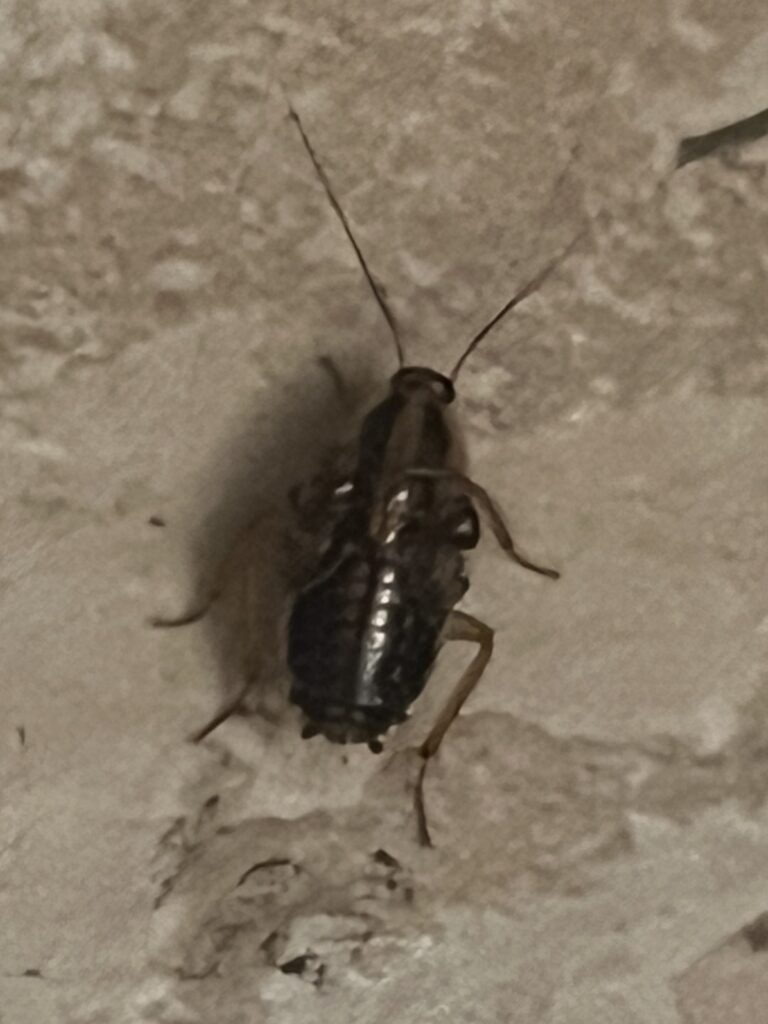
Newly hatched nymphs are tiny, dark, almost black, and wingless, with a distinct lighter stripe running down the center of the back. They look different enough from adults that people often assume they are a separate pest. They are not. They pass through six molting stages (instars) over roughly 60 to 90 days, growing paler and more adult-looking with each molt, before reaching sexual maturity. Tactically, nymphs are the single most important thing you can find. They cannot travel far, so they prove the colony is breeding right there. Catching nymphs on a monitor tells you the nest is close, not that a stray adult wandered in. For a closer look at every stage, see the baby German cockroach identification guide.
German Cockroach Egg Cases
The egg case (ootheca) is a purse-shaped, light-brown capsule roughly 6 to 9 mm long, faintly segmented like a tiny bean pod. What makes it dangerous is the female’s behavior: unlike other species that drop the case early and abandon it, the German cockroach female carries hers, hydrated and protected against drying out, until roughly 24 hours before the eggs hatch. That protection is exactly why sprays fail to stop reproduction: the developing eggs spend almost their entire incubation shielded inside a moving female deep in a harborage, out of contact with any surface residue. A single case holds 30 to 40 eggs. Finding cases (especially empty, hatched shells clustered in a hiding spot) marks an established, reproducing harborage. See the German cockroach egg cases guide.
German Cockroach Droppings
Droppings are one of the most reliable pieces of evidence you have. They look like ground pepper, coarse coffee grounds, or dark smudging and staining, concentrated in corners, drawer tracks, cabinet hinges, and along the edges where roaches run. In heavier infestations they build up into visible speckling and dark streaks. These deposits are not just waste. They carry the aggregation pheromone that recruits more roaches to the site, which is why droppings and harborages are found together. Learn to read the density: the heaviest speckling sits closest to the nest. See German cockroach droppings.
German Cockroach vs. Asian Cockroach
The Asian cockroach (Blattella asahinai) is the German cockroach’s near-identical twin. Same size, same tan color, same two stripes. You cannot reliably tell them apart by looks. You tell them apart by behavior. The Asian cockroach is a strong flier, lives primarily outdoors in leaf litter and mulch, and is drawn to lights at dusk. The German cockroach runs rather than flies and lives indoors year-round. If your “German” cockroach is flying toward a porch light or TV screen in the evening, or if the problem is worst near an exterior door in a warm climate, you may be fighting a different insect that calls for a different, outdoor-focused approach. See German cockroach vs. Asian cockroach.
German Cockroach vs. American Cockroach
The American cockroach is the big reddish-brown insect most people picture as a “water bug” or “palmetto bug.” It is far larger, often well over 1.5 inches, and typically lives in basements, drains, sewers, crawl spaces, and other warm, damp, communal areas, wandering into living spaces rather than breeding in your kitchen cabinets. Size alone usually separates the two, and the difference matters: American cockroaches are managed largely through drain, moisture, and entry-point control, while German cockroaches demand an interior baiting and sanitation campaign. See German cockroach vs. American cockroach.
German Cockroach Behavior and Biology
German cockroaches do not wander aimlessly. Their movements follow a biological blueprint written by two thousand years of indoor evolution. Understand what they are looking for and how their bodies work, and you can predict exactly where they hide, why they escape you, and how to turn their own instincts into a trap. Three behavioral systems drive nearly everything they do.
The 50-Millisecond Escape Reflex
At the rear of the abdomen sit two small, antenna-like projections called cerci. They are not decoration. They are sophisticated wind sensors covered in fine hairs, wired directly to the legs through giant nerve fibers that are among the fastest-conducting in the insect world. When the cerci detect a minute change in air current. The pressure wave pushed ahead of a descending shoe or a sweeping hand. They trigger an automated sprint in under 50 milliseconds, faster than the roach’s own brain can process the threat. This is a reflex, not a decision. It is why they seem to vanish the instant you move, and it is why swatting is a losing strategy: you are trying to beat a purpose-built early-warning system with a slow, air-displacing weapon. You do not out-react this insect. You out-plan it.
Thigmotaxis: The Craving for Confinement
German cockroaches are strongly thigmotactic, which means they have a genuine biological need to feel solid surfaces pressing against the top and bottom of their bodies at the same time. A roach out in the open is a stressed, exposed roach; a roach wedged into a tight crack is a calm one. They favor gaps as narrow as 1.6 mm, about one-sixteenth of an inch. The working rule: if a credit card can slide into a gap, a German cockroach can nest inside it. This single behavior explains most of the fight. It keeps them off open surfaces and away from predators and drafts. It keeps them out of contact with sprays applied to visible baseboards while the colony sits safely inside the wall void. And it tells you exactly where to look and where to place bait, not on the floor, but in the seams, cracks, and voids where they actually live.
The Aggregation Pheromone
Roaches are not truly social like ants or bees (there is no queen, no division of labor), but they are intensely gregarious. They deposit an aggregation pheromone in their feces that acts as a chemical beacon broadcasting a single message: this spot is warm, humid, and safe. Other roaches read that signal and gather to it, which is why you find them packed together in dense harborages where adults, nymphs, and egg cases crowd into the same few square inches. Those sites are marked by the pepper-like speckling you learned to spot in the droppings section. This behavior is a weakness you can exploit: because roaches cluster tightly around dependable resources, a well-placed bait inside an active harborage reaches many insects at once instead of one at a time.
These insects are also primarily nocturnal, evolved to forage in darkness and hide during daylight. That is why sightings spike after the lights go out, why a midnight trip to the kitchen sends them scattering, and why seeing them casually in daylight is a warning sign rather than a random event. For the full picture of their nighttime habits and what daytime activity really means, see why German cockroaches come out at night.
Why German Cockroaches Infest Buildings
An infestation is not a verdict on your character or your cleanliness. It is a verdict on available resources. German cockroaches pursue three things, and any building that supplies all three within reach of a hiding place is a viable target, including spotless ones. Clean homes get infested all the time, because clean is not the same as sealed, dry, and resource-free. For the full breakdown of how they get in and why even immaculate homes get hit, see why German cockroaches infest buildings.
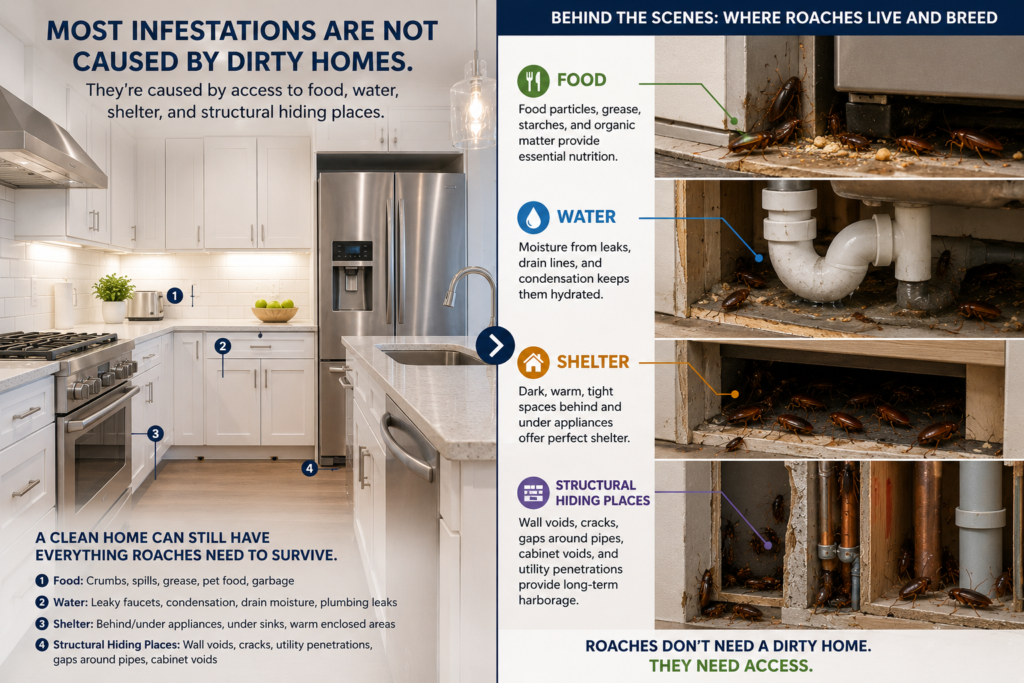
THE BIG THREE REQUIREMENTS
| 1. MOISTURE Sinks, drains, drip pans, condensation, leaks. |
2. HEAT Fridge compressors, motors, electronics. |
3. HARBORAGE Gaps, wall voids, tight thigmotactic cracks. |
Of the three, water is the non-negotiable. A German cockroach can survive roughly a month without food but dies within about a week without water. That asymmetry is a weapon, and this manual uses it in Phase One: deny moisture and you put the entire population on a one-week clock while your bait becomes the only reliable meal in the building. Heat drives them toward appliances and electronics that run warm around the clock, and harborage (the tight, dark, confined spaces their bodies crave) determines exactly where they set up. Remove or reduce any one of the three and the environment gets harder for them; remove all three and it becomes uninhabitable.
The German Cockroach Life Cycle
The German cockroach develops through three stages (egg case, nymph, and adult) in what biologists call incomplete metamorphosis: there is no grub or pupa, just a smaller wingless version that molts its way up to adulthood. Understanding the timeline is not trivia. It tells you why elimination takes weeks rather than days, and why quitting too early hands the colony back everything you took. Miss any single stage (one protected egg case, one hidden pocket of nymphs), and the population recovers. For the complete stage-by-stage timeline with development times and temperatures, see the complete German cockroach life-cycle guide.
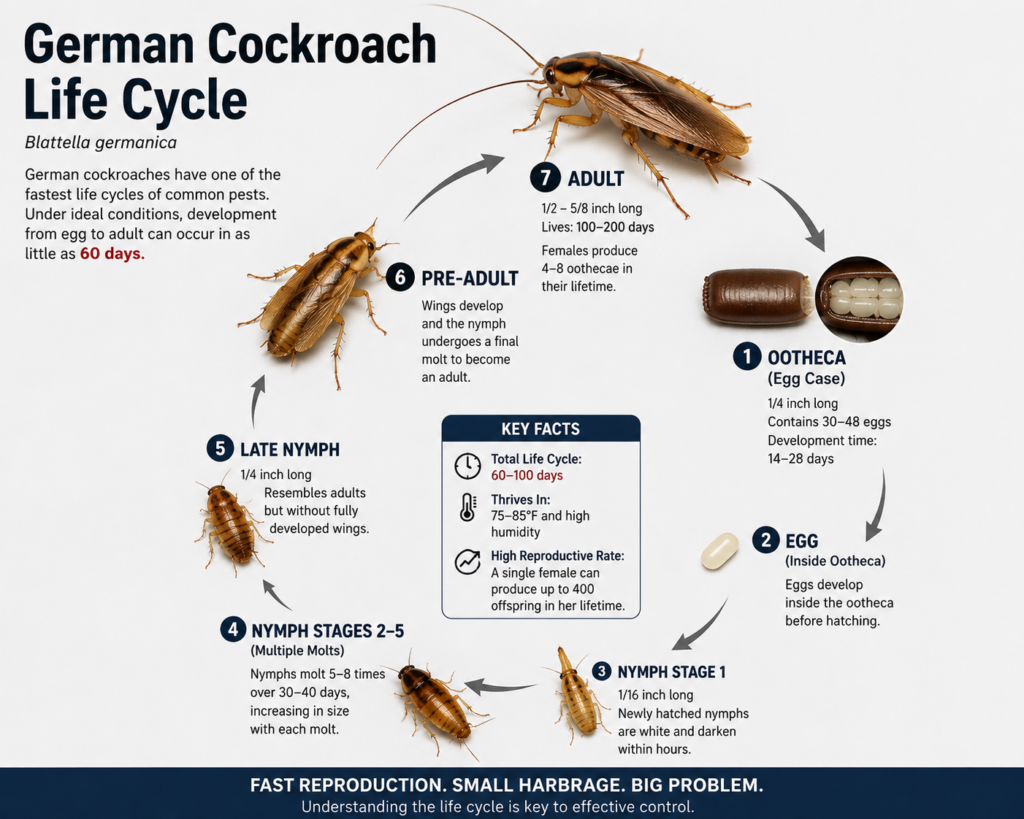
THE LIFECYCLE
[ OOTHECA / EGG CASE ]. Carried by female until ~24 hrs before hatch; 30–40 eggs
↓
[ NYMPH (6 instars, 60–90 days ]) dark, wingless, pale center stripe
↓
[ WINGED ADULT ]. Light brown/tan, twin pronotal stripes, sexually mature
The tactical takeaway lives in the gaps between stages. When you first knock down the visible adults, a wave of protected egg cases is still incubating inside the harborage, untouched by anything you sprayed. Those cases hatch days or weeks later and the population appears to “come back.” It did not come back. It was never fully hit. This is why a residual, transferable strategy that keeps working through successive hatches beats any one-time blitz, and why you keep pressure on until the monitors go quiet across a full breeding cycle, not just until the counter drops.
How Fast German Cockroaches Reproduce
Reproductive speed is this insect’s most lethal weapon, and it is the reason casual control almost always fails. A single female produces four to eight egg cases across her lifetime, each carrying 30 to 40 eggs. Under ideal indoor conditions (steady warmth, water, and food) with near-perfect survival, one pregnant female introduced into a clean building can seed a line numbering 10,000 to 30,000 individuals within a single year. That is the math of an infestation: not addition, but compounding.
Run the logic and the strategy becomes obvious. If you kill 90 percent of what you can see but leave the harborage and its egg cases intact, the surviving 10 percent, plus every case that hatches after your treatment, rebuilds the population in a matter of weeks. Reproduction simply outruns half-measures. This is also why a single confirmed roach deserves respect rather than a shrug, especially when it is a nymph or an egg-carrying female: the former proves breeding on site, the latter is a colony-in-waiting. See how fast German cockroaches reproduce.
Where German Cockroaches Hide
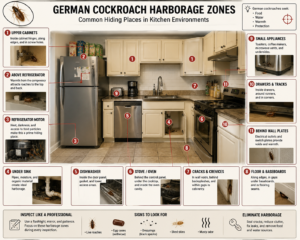
Because harborage choice is driven by heat, moisture, and confinement, you can predict the strongholds before you even open a cabinet. The colony lives where warmth and water meet a tight, dark space, and in most homes that means the kitchen and bathroom. When you inspect, hit these high-probability zones first, flashlight in hand, looking for live insects, droppings, shed skins, and egg cases. For the complete room-by-room map, see where German cockroaches hide.
- The compressor bay: the warm, vibrating, humid space behind and beneath the refrigerator, around the compressor and drip pan. The single best roach oasis in most homes. Heat, condensation, and darkness in one protected place. Pull the fridge out and inspect it first.
- Cabinet hinges and corners: the small metal hollows of European-style hinges and the tight back corners of cabinets offer perfect thigmotactic cover right next to where food is stored and prepared.
- The under-counter lip: the dark gap where a countertop meets the cabinetry beneath it is a primary transit highway between harborages.
- Electronic enclosures: microwaves, coffee makers, toasters, dishwashers, cable boxes, and even wall clocks provide internal warmth from electrical current and are frequently infested from the inside.
- Sink and vanity cabinets: the plumbing under the kitchen and bathroom sinks combines moisture, wall-void access around the pipes, and darkness. A textbook harborage.
- Cracks, seams, and clutter: loose baseboards, torn wallpaper, stacked cardboard, and cluttered storage all create the tight spaces they need.
[IMAGE PENDING. Cutaway kitchen diagram with harborage hotspots flagged; alt: “Kitchen cutaway showing German cockroach harborage zones behind refrigerator, in cabinet hinges, and under counters.”]
Evolutionary Armor: Why They Are Hard to Kill
To understand why retail bug sprays fail against this insect, you have to understand the defense systems Blattella germanica has evolved through decades of human chemical warfare. This is not a bug that is merely hard to hit. It is a bug that has genetically and behaviorally adapted to survive the exact products sitting on the hardware-store shelf. There are three layers of armor, and each one defeats a different amateur tactic. Fight the way the armor expects you to fight, and you lose. Understand it, and you route around it.
1. The Repellent-Spray Trap
Most consumer aerosols, especially the pyrethroids that dominate retail shelves, are highly repellent. When you spray a baseboard thinking you are building a defensive barrier, you are actually sounding an alarm. The roaches smell the chemical, register it as danger, and flee. Deeper into wall voids, up into electrical conduits, and out into adjacent rooms and neighboring units. You do not contain the infestation; you scatter it. A localized kitchen problem becomes a multi-room, whole-structure problem, and the colony you could have baited in one place is now spread across three. This is the single most common way homeowners make an infestation worse, and it is why cockroach bug bombs fail so reliably. Total-release foggers drench open surfaces the roaches avoid while pressurizing them deeper into the harborages the fog never reaches.
2. Physiological Resistance: The Detox Engine
If a resistant roach does make contact with an insecticide, its body deploys chemical countermeasures faster than the poison can act. Resistant populations carry elevated levels of metabolic enzymes, notably the cytochrome P450 family, that bind incoming insecticide molecules and break them into harmless fragments before they can reach the nervous system. On top of that, generations of exposure can physically reshape the nerve receptors the poison is designed to attack, a mechanism called target-site resistance: the poison arrives, but the lock it was built to turn has changed shape, so nothing happens. Peer-reviewed studies have confirmed that common consumer residual sprays now lack meaningful efficacy against many resistant field populations. The practical lesson is blunt: spraying more of a product the population already tolerates does nothing but pressure the survivors to become more resistant still.
3. Behavioral Resistance: The Glucose Lockout
The most remarkable layer of armor is behavioral. In the 1990s, pest professionals watched in confusion as cockroaches suddenly began refusing highly effective sweet gel baits that had worked for years. Researchers found the cause: glucose aversion. A genetic mutation had spread through the global population that rewired the insects’ taste receptors so that glucose, the corn-syrup sugar used as the base food matrix in many baits, now registers as intensely bitter rather than sweet. An averse roach takes one taste of the bait, recoils as if it bit into poison, and walks away, bypassing the lethal active ingredient mixed inside. No spray can overcome a bug that simply refuses to eat, and this is the precise reason bait rotation is non-negotiable: you must be willing to switch off sweet matrices entirely and hit the population with savory, protein, and lipid-based baits it has not evolved to reject. This one adaptation is why the rotation schedule later in this manual exists.
How German Cockroach Infestations Spread
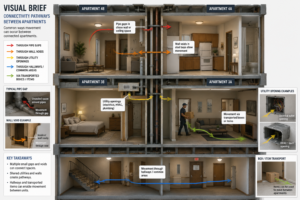
German cockroaches spread two ways, and both matter for control. Over long distances they hitchhike: they ride into buildings inside grocery bags, cardboard boxes, luggage, secondhand furniture, electronics, restaurant deliveries, and, the classic offender, used appliances, which combine warmth, harborage, and enough concealment to smuggle an entire breeding population through your front door. This is why a spotless home can suddenly develop an infestation with no warning, and why inspecting anything secondhand before it crosses your threshold is basic hygiene; see how to inspect used appliances for cockroaches. Over short distances they move through the structure itself (shared walls, plumbing chases, electrical conduits, and utility penetrations) which is why infestations migrate between apartment units even when one resident does everything right. Understanding both paths tells you where to seal, what to inspect, and why some infestations demand a building-wide response rather than a unit-by-unit one.
Signs of a German Cockroach Infestation
Read the evidence before you react, because the evidence tells you where the colony is and how large it has grown. Because these insects are nocturnal and secretive, the signs they leave behind are often more useful than the roaches themselves. For the full room-by-room checklist, see signs of a German cockroach infestation. Watch for:
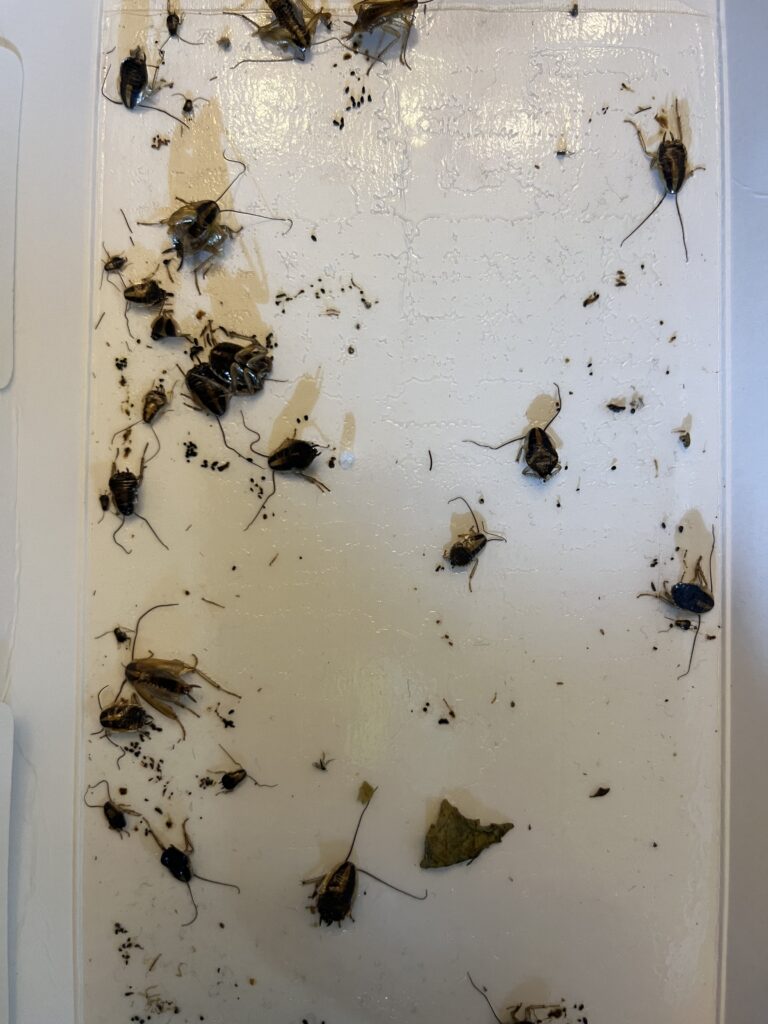
- Droppings: pepper-like specks, coffee-ground granules, and dark smudging in corners, drawers, cabinet hinges, and along runways. The densest deposits sit nearest the nest.
- Live nymphs: tiny dark striped insects. The strongest possible proof of active on-site breeding.
- Egg cases: light-brown, purse-shaped capsules, or the empty hatched shells left behind in harborages.
- Shed skins: pale, translucent cast-off exoskeletons dropped as nymphs molt through their instars.
- A musty odor: heavy infestations produce a distinctive oily, musty smell from the aggregation pheromone and sheer numbers.
- Daytime sightings: nocturnal insects active in daylight usually signal crowding or population pressure. A sign the infestation is well established. See why German cockroaches appear during the day.
- Sticky-monitor captures: the one truly objective measurement you have. See the German cockroach sticky-monitoring guide.
How to Determine Infestation Severity
Severity sets the scale of your response. How aggressively you treat, how long the campaign runs, and whether you can win it alone. Grade it with monitors and inspection evidence, not with gut feeling or the number of roaches that happened to startle you last night. The full grading method is in the German cockroach infestation severity guide; here is the field version.
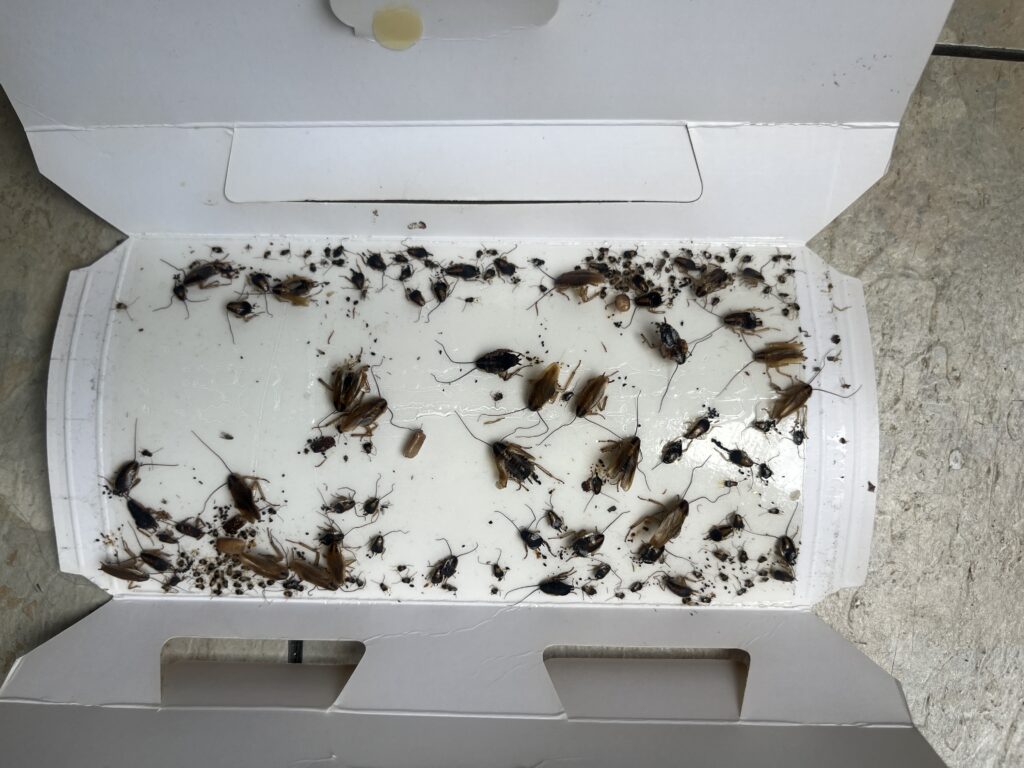
- Low: a few adults, no nymphs, minimal droppings, and monitors that stay nearly empty over 48 to 72 hours. Usually an early or recently introduced infestation. The best-case scenario and the fastest to clear.
- Moderate: regular sightings, nymphs present, droppings concentrated in several zones, and steady monitor catches. The colony is established and reproducing. Winnable with disciplined DIY, but it will take weeks and consistent follow-through.
- Severe: daytime activity, multiple life stages together, heavy droppings and staining, a noticeable odor, and roaches spreading beyond the kitchen into other rooms. Monitors fill quickly. This is an entrenched, often multi-room infestation that demands an aggressive, sustained campaign and may warrant professional help.
Health Risks and Cockroach Allergens
German cockroaches are more than a nuisance, and this is where the fight stops being cosmetic. Their droppings, shed skins, saliva, and decomposing body fragments accumulate into a potent source of indoor allergens. Government environmental-health agencies specifically identify cockroach allergen as a recognized asthma trigger, and the burden falls hardest on children and on residents of dense, multi-unit housing where infestations are common and hard to fully clear. Beyond allergens, roaches travel through drains, garbage, and filth and can mechanically carry bacteria onto food-contact surfaces as they forage.
This raises the stakes of the whole operation. Control is not about squeamishness. It is an indoor-air-quality and public-health issue, especially in a home with an asthmatic child. It also reframes the goal: the point is to reduce the allergen-producing population and clean up its residue, not to blanket your living space in pesticide. Aggressive over-spraying trades a cockroach-allergen problem for a pesticide-exposure problem, which is exactly the wrong trade in a household that is already dealing with respiratory sensitivity. Targeted baiting, sanitation, and thorough cleanup of droppings and harborages protect health far better than a fog of aerosol.
How to Get Rid of German Cockroaches: The Counter-Offensive
Eradication is a coordinated, multi-phase campaign that targets the colony’s biology, denies it resources, and routes around its chemical armor. The phases run in order for a reason. Each one sets up the next, and skipping ahead is how people waste product and lose ground. Do not open with the chemical strike. Open by taking away the enemy’s supplies and finding out where it lives. For the complete step-by-step walkthrough, see the complete German cockroach elimination plan.
TACTICAL ERADICATION TIMELINE
[ PHASE 1. INTERDICTION ] → cut off water & food, seal crevices
↓
[ PHASE 2. RECONNAISSANCE ] → deploy monitor boards, map the hotspots
↓
[ PHASE 3. CHEMICAL STRIKE ] → deploy resistance-bypassing chemistry
↓
[ PHASE 4. BAITING CAMPAIGN ] → micro-placements in transit lanes
↓
[ PHASE 5. ROTATION (Day 90) ] → shift both chemistry and food matrix
Phase 1 · Interdiction: Starve the Battlefield
A cockroach survives a month without food but dies within a week without water. Cut the resources first, before you place a single drop of bait, because a hungry, thirsty colony is a weaker colony, and because your bait cannot compete with a kitchen full of free food. Interdiction is not glamorous, but it is the phase that makes every later phase work.
- Dry the battlefield. Every night before bed, wipe down sinks and counters, dry the tub and shower, empty and dry pet water bowls, and fix any dripping pipes or faucets under the cabinets. Deny them water and you put the whole population on a one-week clock.
- Secure the rations. Move cereal, pet food, snacks, and all dry goods into airtight, hard-sided glass or plastic containers. Clean up crumbs, sweep nightly, and take out the trash into a sealed can. The goal is to make your bait the single most attractive food in the room.
- Deep-clean the grease. Pull appliances away from the wall and scrub the grease films and food buildup off the stove, backsplash, and floors with an enzyme cleaner or heavy-duty degreaser. Grease is competing food. Leave a greasy stove in place and the roaches will ignore your bait in favor of it.
Phase 2 · Reconnaissance: Map Before You Treat
Do not go into battle blind. Before you apply a drop of bait, find out where the population actually is. Place sticky monitor boards flush against walls, in the back corners of cabinets, behind and beneath the refrigerator, and inside sink cabinets near the water pipes. The harborages you mapped earlier. After 48 hours, read the boards like a map: the traps holding the most nymphs and the heaviest fecal speckling mark the primary nesting zones. Concentrate your baiting within three feet of those hotspots, where it will do the most damage. Reconnaissance does double duty. It aims your treatment now, and it becomes your scoreboard later, because falling monitor counts over the following weeks are the only honest proof the campaign is working.
Selecting Your Chemistry (IRAC Groups)
Phase 3 is the chemical strike, and because resistance is real, this is where most homeowners pick wrong. You cannot choose products by brand name or by which can is loudest on the shelf. You choose by mode of action, how the chemistry attacks the insect, because a population resistant to one mode of action will shrug off every product that shares it, no matter how many different labels they wear. Every insecticide carries an IRAC group number (from the Insecticide Resistance Action Committee) printed on the label that identifies its mode of action. Rotating across group numbers is how you stay ahead of genetic resistance. Two categories do the heavy lifting for German cockroaches.
- The core weapon · GABA-target chemistry: advanced compounds such as broflanilide (IRAC Group 30) act as “brake-jammers” on the nervous system, locking it into permanent overdrive that leads to rapid paralysis and death. Because they hit a receptor site only recently exploited by insecticides, there is essentially no cross-resistance to older fipronil or pyrethroid chemistries. Making them a powerful option against populations that have survived everything else.
- The stealth weapon · bio-activated chemistry: indoxacarb (IRAC Group 22) is a “pro-insecticide.” It is harmless at the moment the roach eats it and only converts into a lethal nerve-blocker once the insect’s own digestive enzymes metabolize it. That built-in delay is a feature, not a flaw: it gives the poisoned roach time to return to the harborage and pass the toxin to its nestmates before it dies, extending the kill into the nest.
Two more tools round out the arsenal. Insect growth regulators (IGRs) do not kill outright. They disrupt development and reproduction, sterilizing adults and preventing nymphs from maturing, which quietly breaks the breeding cycle underneath your baiting. They are strongest deployed alongside a bait program rather than alone; see insect growth regulators for German cockroaches. Boric acid, applied as a fine dust in cracks and voids (never in wet piles), is a durable, low-resistance stomach poison that has been killing roaches for a century; see boric acid for German cockroaches. For exactly where to put gel bait, see where to place German cockroach gel bait.
Safety note: always match the product to its label, and treat the label as law. Never apply liquid insecticide into electronics or electrical equipment unless the label and the equipment instructions specifically permit it. Follow all label directions, local regulations, and property rules, and keep products away from food-contact surfaces, children, and pets.
Precision Baiting Tactics: The Trojan Horse
German cockroaches are cannibalistic, and they practice coprophagy. They eat the feces of other roaches. Grim biology, but exploitable, and it is the mechanism that makes gel bait the most powerful tool you own. The right bait turns the nest against itself through a domino effect: a foraging roach eats the bait, carries it back to the harborage, and dies there. Its contaminated droppings poison the nymphs that eat them (secondary kill), and its carcass poisons the nestmates that scavenge it (tertiary kill). One well-placed drop of bait can cascade through an entire cluster of roaches that never left the wall.
THE DOMINO EFFECT IN THE NEST
[ FORAGING ROACH ]. Consumes bait→ [ RETURNS TO NEST ] → dies & defecates
↓
[ NYMPHS EAT FECES ] = secondary poisoning
[ NESTMATES EAT CARCASS ] = tertiary poisoning
The cascade only happens if you place the bait correctly, and placement discipline is where most DIY baiting quietly fails:
- Micro-placements, not lines. Never squeeze out long ribbons or big blobs of gel. Roaches find large globs repellent and will walk around them, and oversized placements dry out before they are eaten. Apply tiny, match-head-sized drops every 12 to 18 inches along runways and near harborages. Many small placements beat a few large ones every time.
- Place at the harborage, not in the open. Bait directly in the tight spots the roaches actually use. Inside corners, behind cabinet hinges, at plumbing penetrations, along the under-counter lip, and inside appliance compressor bays. Concentrated within three feet of the hotspots your monitors identified.
- Keep it clean and keep it fresh. Never spray liquid insecticide or aerosol over or near your bait. Sprays repel roaches away from the bait and contaminate its food ingredients, guaranteeing they refuse it. Baiting and spraying the same zone cancel each other out. Check placements regularly and refresh any that have been eaten or have dried out.
The 90-Day Bait Rotation Schedule
The most common failure in serious cockroach eradication is running the same bait for too long. Push a single product past about 90 days and the surviving population adapts to it. Either through outright chemical resistance to the active ingredient, or through bait aversion, where the roaches simply learn to avoid that flavor. Remember glucose aversion: this species can evolve to refuse an entire food matrix. To hold control through the whole campaign, rotate both the active ingredient (by IRAC group) and the food matrix (sweet, protein, lipid) on a strict schedule, so you never give the population a stable target to adapt against. The rotation below is a mode-of-action framework, not a shopping list.
| Phase | Timeframe | Active (IRAC Group) | Food Matrix | Biological Goal |
|---|---|---|---|---|
| 1: The Opener | Days 1–90 | Indoxacarb (Group 22) | Sweet / carbohydrate-heavy | Exploit the foraging drive; bio-activation Trojan-horses the toxin into the nest and decimates the bulk of the population. |
| 2: The Wedge | Days 91–180 | Fipronil + boric acid (Group 2B + 8D) | Moisture-rich protein | Disrupt any early resistance; hit glucose-averse roaches with a savory profile they have not learned to refuse. |
| 3: The Closer | Days 181–270 | Broflanilide (Group 30) | Savory lipid / protein | Shut down the GABA receptors of any surviving “super-roaches” with a brand-new chemical class and no cross-resistance. |
Product names change and availability varies by region and by what is legal where you live, so treat the table as a framework of modes of action and food types, not a specific brand list. The principle is what matters: never let the population settle in against one chemistry or one flavor. See how long German cockroach elimination takes for how this schedule maps onto a real timeline.
Why German Cockroach Treatments Fail
Before you blame genetic super-roaches for a treatment that is not working, check the boring failures, because the boring failures cause the overwhelming majority of losses. Resistance is real, but it is far down the list of reasons a homeowner’s campaign stalls. Run this checklist first:
- Bait placed wrong. Too far from the harborages, in too few spots, or out in the open instead of in the cracks where roaches travel.
- Bait gone bad. Dried out, crusted over, dusty, or contaminated. Roaches will not eat spoiled bait.
- Competing food. Grease on the stove, crumbs under the toaster, pet food left out, or an open trash can that beats your bait for attractiveness.
- Spray contamination. Repellent aerosol or cleaner residue near the bait, driving roaches away from it and ruining the food matrix.
- Quitting too early. Stopping after a couple of weeks, before the egg cases hatch and the reproductive cycle is fully broken. This is the classic “it came back” mistake.
- An outside source. A shared wall, a neighboring unit, or a recurring delivery re-seeding the population no matter how well you treat your own space.
Only after you have genuinely ruled all of those out should you conclude you are facing true insecticide resistance. And the answer to resistance is never a heavier hand with the same sprayer. It is rotation to a new mode of action, as laid out in the schedule above.
How Long Elimination Takes
Set your expectations honestly, because unrealistic timelines are what make people quit right before they win. A low infestation caught early can collapse in about two to four weeks of disciplined baiting, sanitation, and monitoring. A moderate, established infestation typically takes one to three months. Severe or building-wide situations can run longer still, sometimes several months of sustained effort. The timeline is governed by the reproductive cycle, not by how fast the poison acts: you have to keep unbroken pressure on through successive egg-case hatches until every generation has been hit.
Expect a specific pattern. Counts drop quickly at first as the visible adults take the bait, then a second wave of nymphs appears a few weeks later as protected egg cases hatch. That second wave is not failure. It is the cycle working exactly as predicted, and it is the moment most people give up. Do not. Keep the bait fresh, keep the monitors down, and hold the line through that wave, and it will be smaller than the first. When monitors read zero across a full breeding cycle, the colony is gone. See how long German cockroach elimination takes.
How to Prevent Reinfestation
Winning the war is not the same as keeping the peace. Once your monitors show zero catches and the population has collapsed, fortify the perimeter so a second invasion cannot establish itself, because the same conditions that invited the first colony will invite the next one. Prevention is just the interdiction phase made permanent. See preventing German cockroaches.
- Exclusion: seal the borders. Use a quality silicone caulk to close the gaps around kitchen and bathroom backsplashes, cabinet bases, baseboards, and especially the utility holes where pipes and wires enter the wall under sinks. Every sealed gap is one less harborage and one less migration route from a neighbor.
- De-clutter, and kill the cardboard. German cockroaches love cardboard. The corrugation is ideal thigmotactic shelter and the glue is food. Replace cardboard storage boxes with latching plastic bins, and clear the clutter that gives roaches places to hide.
- Maintain the habits. Keep up the nightly moisture control and sanitation from Phase 1. Dry sinks, sealed food, no crumbs, sealed trash. Permanently. The routine that starved the colony is the routine that keeps the next one from starting.
- Monitor forever. Leave a few glue boards permanently hidden under the sink and behind the refrigerator, and check them once a month. Catch a single nymph and you catch the next generation before it starts. Turning a potential infestation back into a single insect. See preventing German cockroaches for the full maintenance routine.
German Cockroaches in Apartments
Apartments are the hardest case in cockroach control, and it is not your fault when they are. You can run a flawless campaign in your own unit and still lose if the population keeps marching through the shared walls, plumbing chases, and utility gaps from an untreated neighbor. Research consistently shows that building-wide, coordinated Integrated Pest Management dramatically outperforms scattered, unit-by-unit spraying, because the roaches do not respect the lines on the lease. Practically, that means your job has two fronts: control your own space, and push the building to act.
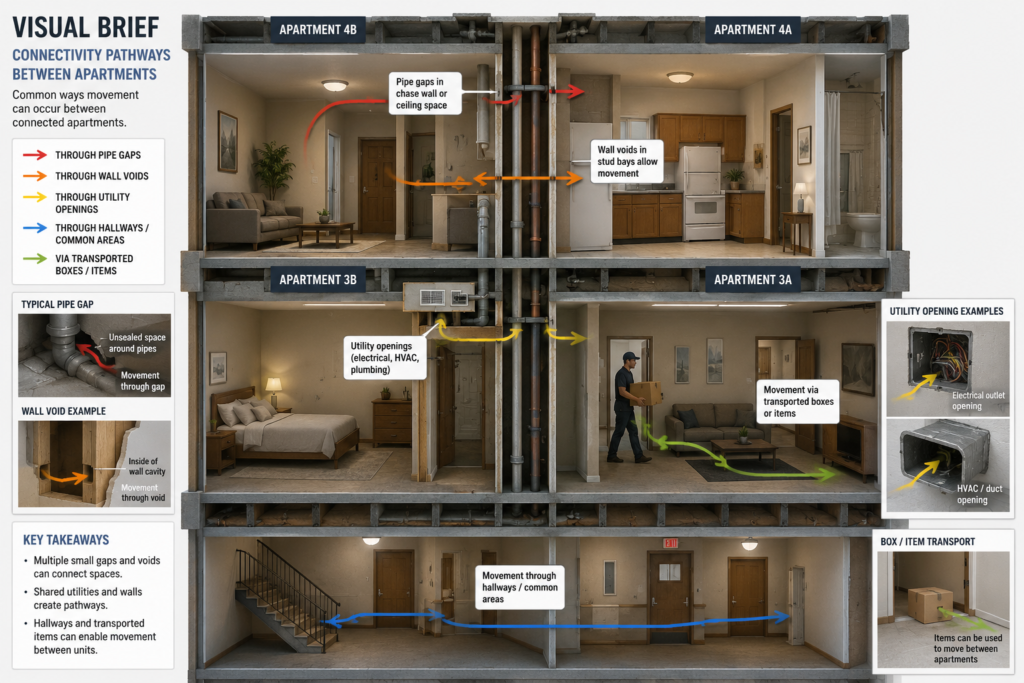
On your own front, run the full campaign (interdiction, reconnaissance, baiting, and monitoring), and seal your unit’s penetrations to slow migration from adjoining apartments. On the building front, document everything: dates, photos, monitor counts, and locations. Notify property management in writing and keep a copy, and press for coordinated treatment of your unit plus the units above, below, and beside yours at the same time. A written, evidence-backed request is far harder to ignore than a phone call, and it protects you as a tenant. See German cockroaches in apartments and the apartment prevention checklist.
When to Call a Professional
The Roach Doctrine default is that a disciplined homeowner, armed with the system in this manual, can win this fight without a recurring exterminator bill. Most infestations are beaten with sanitation, targeted baiting, rotation, and patience. The tools you now understand. But a professional is a legitimate tool for the hard cases, not a crutch to reach for at the first sighting. Call a licensed pest-management professional when the situation is genuinely beyond do-it-yourself:
- A severe, entrenched, or building-wide infestation that keeps rebounding despite correct treatment.
- Repeated failure even after you have run the phases properly, ruled out the boring failures, and rotated chemistry.
- A commercial food operation, where regulatory exposure and inspection stakes are too high to gamble on.
- A household where a resident’s health (severe asthma, immune compromise) makes prolonged exposure to either the allergens or the treatment unacceptable, and expert judgment is worth paying for.
Even then, hire the pro as a specialist for a hard problem, not as a subscription that keeps you dependent and in the dark. A good one will inspect, identify, treat with the same IPM logic in this manual, and tell you what they are doing and why. If someone wants to sell you endless monthly spraying without ever addressing sanitation, exclusion, and harborage, you are being managed as a customer, not served as one.
Frequently Asked Questions
Does one German cockroach mean an infestation?
Not automatically: a lone roach may have hitchhiked in on a bag, box, or appliance. But because these are indoor-adapted breeders, one sighting deserves inspection and monitoring rather than a shrug. The risk is much higher if it is a nymph, an egg-carrying female, one of several sightings, or found near droppings, since any of those points to on-site breeding. See does one German cockroach mean an infestation?
Why am I seeing German cockroaches during the day?
These insects are nocturnal, so daytime activity usually signals crowding, population pressure, a disturbed harborage, or recent treatment pushing them out of hiding. Repeated daytime sightings often mean the infestation is well established and deserves prompt, serious attention.
Do German cockroaches fly?
Adults have fully developed wings but run rather than fly; at most they may glide briefly from a height if startled. A similar-looking roach that actively flies toward lights outdoors is more likely an Asian cockroach, which calls for a different, outdoor-focused approach.
Can German cockroaches come through drains?
German cockroaches are more often associated with the gaps around pipes, wall voids, and utility penetrations than with traveling up through a water-filled drain trap. A sighting in a sink does not prove the insect came up the drain. Inspect the surrounding cabinet and the openings where the plumbing enters the wall, which are the more likely routes.
Can German cockroaches live in the refrigerator?
They are far more likely to occupy the warm mechanical area behind and beneath the appliance, the compressor bay and drip pan, than the cold food compartment. Inspect the accessible compressor area, the drip pan, wiring openings, and the floor-wall junction behind the refrigerator, which is one of the single best harborages in a home.
Can German cockroaches live in electronics?
Yes. Warm electronics (microwaves, coffee makers, cable boxes, game consoles) provide dark, protected cavities with the heat and confinement roaches crave. Do not spray liquid insecticide into electrical equipment unless the label specifically permits it; instead rely on monitoring, careful cleaning, nearby baiting, isolation, or professional treatment.
Will cleaning alone eliminate German cockroaches?
Usually not. Cleaning removes competing food and moisture and dramatically improves how well your bait performs, which makes it essential, but an established breeding population still requires direct control through baiting and monitoring. Sanitation sets the trap; the bait springs it.
Why won’t the roaches eat my bait?
Usually one of the boring causes: poor placement away from harborages, dried-out or contaminated bait, competing food such as grease and crumbs, or repellent spray residue nearby. It can also be glucose aversion, a genuine behavioral resistance to sweet baits, which is exactly why you rotate to a savory protein or lipid matrix. Check placement and freshness before you blame genetics.
What is the best German cockroach bait?
There is no single universally best bait, and any product that claims to be one is marketing to you. Performance depends on placement, freshness, the food matrix, competing food, bait acceptance, and the population’s resistance and treatment history. Judge a bait by monitored results in your home, not by advertising, and plan to rotate, because the best bait this quarter is not the best bait next quarter.
Does boric acid kill German cockroaches?
Yes, when used correctly. Properly labeled boric acid applied as a fine, barely visible dust in cracks, voids, and under appliances is a durable, low-resistance stomach poison. Roaches pick it up on their bodies and ingest it while grooming. Thin applications work; visible piles do not, because roaches walk around them. Always follow the label and keep it away from food-contact surfaces, children, and pets.
Do insect growth regulators actually work?
They do, but not the way a fast-acting poison does. IGRs interfere with development and reproduction, sterilizing adults and stopping nymphs from maturing, which breaks the breeding cycle underneath your baiting rather than dropping roaches on sight. They are most valuable as one component of a broader IPM program, working quietly in the background while your baits do the visible killing.
Can German cockroaches become immune to insecticides?
“Resistant” is more accurate than “immune.” A resistant population can tolerate exposure that would kill a susceptible one, through detoxifying enzymes such as cytochrome P450s, mutated target sites, reduced penetration, behavioral avoidance, or a combination. The counter is not spraying more of the same. It is rotating modes of action by IRAC group so the population never gets to specialize against one attack.
Are German cockroaches a sign of a dirty home?
No. They enter clean homes constantly through neighboring units, deliveries, luggage, and secondhand items. Sanitation strongly affects how fast they spread and how hard they are to kill, but their presence is not a verdict on your character. Blame wastes time and energy; inspection finds the source and gets you to a plan.
Final German Cockroach Action Plan
Do This Today
- Confirm the species: look for the small tan body and the two dark stripes behind the head.
- Place labeled sticky monitors flush to walls, behind the fridge, and in sink cabinets.
- Inspect the refrigerator compressor, stove, and sink cabinet for droppings, live insects, and egg cases.
- Dry every water source tonight. Sinks, tub, pet bowls, and any leaks.
Within 48–72 Hours
- Read the monitors and mark the hotspots with the most nymphs and droppings.
- Deep-clean grease and food buildup; move all dry goods into airtight containers.
- Apply match-head gel-bait micro-placements within three feet of the hotspots.
- Keep every spray and aerosol well away from the bait zones.
Weekly
- Check monitors and log the trend. Counts should fall week over week.
- Refresh any bait that has been eaten or has dried out.
- Maintain the nightly moisture control and sanitation without exception.
Monthly and Ongoing
- Rotate to a new IRAC group and food matrix at the 90-day mark.
- Seal cracks, penetrations, and cabinet gaps with silicone caulk.
- Replace cardboard storage with latching plastic bins.
- Keep permanent monitors down and inspect monthly. Act on a single nymph.
Eradicating German cockroaches is not about finding a magic spray. It is a systematic war of attrition: absolute sanitation, precision baiting, and strategic chemical rotation, held steady until the evidence confirms collapse. Cut off their water, strike their nervous system with next-generation chemistry, bait to poison the nest from within, and rotate to keep their genetics off balance, and you break the cycle they depend on. Hold the line through the hatch you did not see coming, and the victory is permanent.
Take the Whole System Into the Field
You now have the strategy. If you want it as a field-ready kit. Printable checklists, the complete inspection protocol, and the full elimination playbook in one place you own and control. The Roach Doctrine has you covered. Two options, no pressure. Pick the one that fits how you fight.
The Complete System
The Roach Doctrine, $47
The entire homeowner playbook (inspection, elimination, and prevention as one system you own), and it includes the full 47-Point Inspection inside. For the person who wants to win the whole war.
Enter the Doctrine →Just the Checklist
The 47-Point Inspection, $27
The standalone diagnostic protocol. Every place to check, in order, to find and grade an infestation. For the person who already knows the fight and just wants the field checklist.
Get the Inspection →Not sure which? The Doctrine already contains the inspection, so the $27 is for checklist-only buyers and the $47 is the full system. No codes, no countdown timers. The Roach Doctrine sells itself.
About the Author
M. Cortez is the creator of the Roach Doctrine System and the author behind The Roach Doctrine. This work focuses on translating cockroach biology, infestation diagnosis, Integrated Pest Management, and practical prevention into clear operating plans for renters, homeowners, and property managers. Read more at the author page.
How This Guide Was Researched
This guide was developed using peer-reviewed entomology research, university pest-management resources, and government environmental-health guidance. Evidence was prioritized in this order: peer-reviewed scientific research; government public-health and environmental guidance; university pest-management resources; professional pest-management information; and manufacturer documents only for product-specific facts. Product categories are discussed as management tools rather than proof of effectiveness. Always follow pesticide labels, local laws, property rules, and professional guidance where appropriate.
Last scientifically reviewed: July 17, 2026. Next scheduled review: January 2027.
Scientific References
- Tang, Q., et al. “Solving the 250-Year-Old Mystery of the Origin and Global Spread of the German Cockroach, Blattella germanica.” Proceedings of the National Academy of Sciences, vol. 121, no. 22, 2024, e2401185121. View study
- U.S. Environmental Protection Agency. “Cockroaches and Schools.” Integrated Pest Management in Schools. View EPA page
- U.S. Environmental Protection Agency. “Indoor AirPlus and Asthma.” View EPA page
- U.S. Environmental Protection Agency. “Introduction to Integrated Pest Management.” View EPA page
- Wang, C., and Bennett, G. W. “Comparative Study of Integrated Pest Management and Baiting for German Cockroach Management in Public Housing.” Journal of Economic Entomology, vol. 99, no. 3, 2006, pp. 879–885. View study
- Wang, C., et al. “Effectiveness of Building-Wide Integrated Pest Management Programs for German Cockroach and Bed Bug in a High-Rise Apartment Building.” Journal of Integrated Pest Management, vol. 10, no. 1, 2019, art. 33. View study
- Fardisi, M., Gondhalekar, A. D., Ashbrook, A. R., and Scharf, M. E. “Rapid Evolutionary Responses to Insecticide Resistance Management Interventions by the German Cockroach (Blattella germanica L.).” Scientific Reports, vol. 9, 2019, art. 8292. View study
- Gordon, J. M., et al. “Common Consumer Residual Insecticides Lack Efficacy Against Insecticide-Susceptible and Resistant Populations of the German Cockroach (Blattodea: Ectobiidae).” Journal of Economic Entomology, vol. 117, no. 5, 2024, pp. 2051–2059. View study
- Chai, R.-Y., and Lee, C.-Y. “Insecticide Resistance Profiles and Synergism in Field Populations of the German Cockroach (Dictyoptera: Blattellidae) from Singapore.” Journal of Economic Entomology, vol. 103, no. 2, 2010, pp. 460–471. View study
- Wada-Katsumata, A., and Schal, C. “Glucose Aversion: A Behavioral Resistance Mechanism in the German Cockroach.” Current Opinion in Insect Science, vol. 63, 2024, art. 101182. View review
- McPherson, S., Wada-Katsumata, A., Silverman, J., and Schal, C. “Glucose- and Disaccharide-Containing Baits Impede Secondary Mortality in Glucose-Averse German Cockroaches.” Journal of Economic Entomology, vol. 116, no. 2, 2023, pp. 546–553. View study
- Wada-Katsumata, A., et al. “Salivary Digestion Extends the Range of Sugar-Aversions in the German Cockroach.” Insects, vol. 12, no. 3, 2021, art. 263. View study
- Wang, C., et al. “Residents’ Attitudes and Home Sanitation Predict Presence of German Cockroaches (Blattodea: Ectobiidae) in Apartments for Low-Income Senior Residents.” Journal of Economic Entomology, vol. 112, no. 1, 2019, pp. 284–289. View study
- University of California Statewide Integrated Pest Management Program. “Cockroaches.” UC IPM Pest Notes, Publication 7467. View guide
- University of Florida Institute of Food and Agricultural Sciences. “German Cockroach, Blattella germanica.” Featured Creatures, EENY-2. View guide
Editorial and Affiliate Disclosure
The Roach Doctrine may recommend commercially available pest-management products. When affiliate links are used, they are disclosed clearly. Compensation does not determine scientific conclusions, safety warnings, or treatment recommendations. No article claims one product is universally effective against every German cockroach population. Control performance depends on the building, infestation, application, bait acceptance, resistance profile, sanitation, moisture, resident cooperation, and follow-up.