You can kill every roach you see tonight and still lose. As long as the colony keeps breeding, you’re bailing water out of a boat with a hole in it. Faster scooping never wins. The only way to win is to close the hole. An insect growth regulator for cockroaches does exactly that: it doesn’t out-kill the colony, it shuts down the colony’s ability to replace itself.
IGRs are the piece most homeowners skip and most infestations survive on. If sprays and baits have thinned your roaches but they always come back, this is almost certainly the leg you’re missing. Here’s how IGRs freeze the lifecycle, and why they walk straight past the chemical resistance that defeats everything else.
THE SHORT VERSION
- An IGR doesn’t kill on contact. It mimics juvenile hormone, so nymphs can’t mature and adults are rendered sterile. The colony stops replacing itself.
- Because IGRs attack development (a hormonal target), they bypass the metabolic and gene-amplified resistance that neutralizes neurotoxic sprays.
- Three field-proven actives: pyriproxyfen, hydroprene, novaluron. An IGR is a force multiplier. Run it alongside a bait rotation, never as a solo act.
Why Killing Adults Faster Never Wins
The math of a German cockroach colony is brutal. A single female produces an egg capsule (ootheca) carrying roughly 30 to 40 eggs, and she generates several capsules over her life. Every one of those nymphs can be reproducing in as little as six to eight weeks. Left unchecked, one pregnant female becomes hundreds of roaches inside a single season.
When you spray, you kill the adults and older nymphs you reach. But you don’t reach the egg capsules. An ootheca’s hard shell shields the developing nymphs from most contact insecticides. So the colony reloads from a generation your chemicals never touched. You’re not eliminating the population; you’re pruning it, and pruning makes it hardier. This is the same selection pressure that breeds metabolic resistance: the survivors are the toughest ones, and they’re the ones breeding the next wave.
What an Insect Growth Regulator for Cockroaches Actually Does
Insects carry a natural signal called juvenile hormone that keeps them in their immature stage. As a nymph matures, that hormone naturally drops, which is the trigger that lets it molt into a breeding adult. An IGR is a synthetic copy of that hormone. Deploy it into the harborage and you flood the environment with a permanent “stay young” signal the nymphs can’t shut off.
The result attacks the colony at two points in the lifecycle:
- Nymphs can’t grow up. They’re locked into their immature stage, unable to complete the final molt into a reproducing adult. Some die as oversized “super-nymphs”; none of them breed.
- Adults go sterile. Exposed adults develop twisted, crumpled wings and, more importantly, lose the ability to produce viable offspring. The egg capsules they make fail to hatch.
The Resistance Blind Spot: Why IGRs Bypass the Armor
Here’s what makes IGRs strategically priceless. Nearly every resistance mechanism a roach owns is built to defeat neurotoxins: the sprays and baits that attack the nervous system. Whether it’s behavioral aversion to bait or an overproduced flood of detox enzymes, the colony’s armor is tuned to intercept chemicals aimed at the nerves.
An IGR isn’t a neurotoxin. It’s a hormone mimic aimed at development, a target the enzymatic armor was never built to guard. The P450 and esterase defenses that shred a pyrethroid molecule have no equivalent countermeasure for a growth-hormone signal. That’s why an IGR keeps working on a population that laughs off your spray. You’ve changed the category of attack, not just the brand. Resistance to IGRs exists but is far rarer, which is exactly why they belong in every serious protocol.
Deploy the Right IGR
Three active ingredients carry the load for cockroach work. Read the label for the active, not the brand name:
- Pyriproxyfen: the workhorse juvenile-hormone mimic. Broad, long-lasting, and available in point-source stations and concentrates. A strong default for most residential infestations.
- Hydroprene: the original cockroach IGR, often sold as an aerosol or fogger for treating cracks and voids. Effective, though it typically breaks down faster than pyriproxyfen, so plan to reapply on schedule.
- Novaluron: a chitin-synthesis inhibitor. It works a step differently, blocking the nymph’s ability to build the new exoskeleton it needs to molt. A useful rotation partner if you want to vary IGR chemistry too.
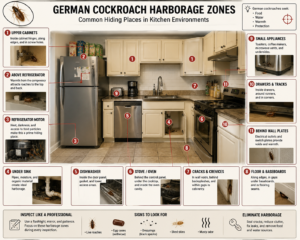
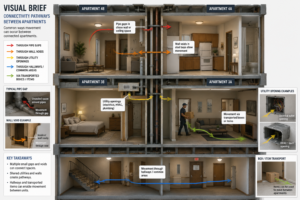
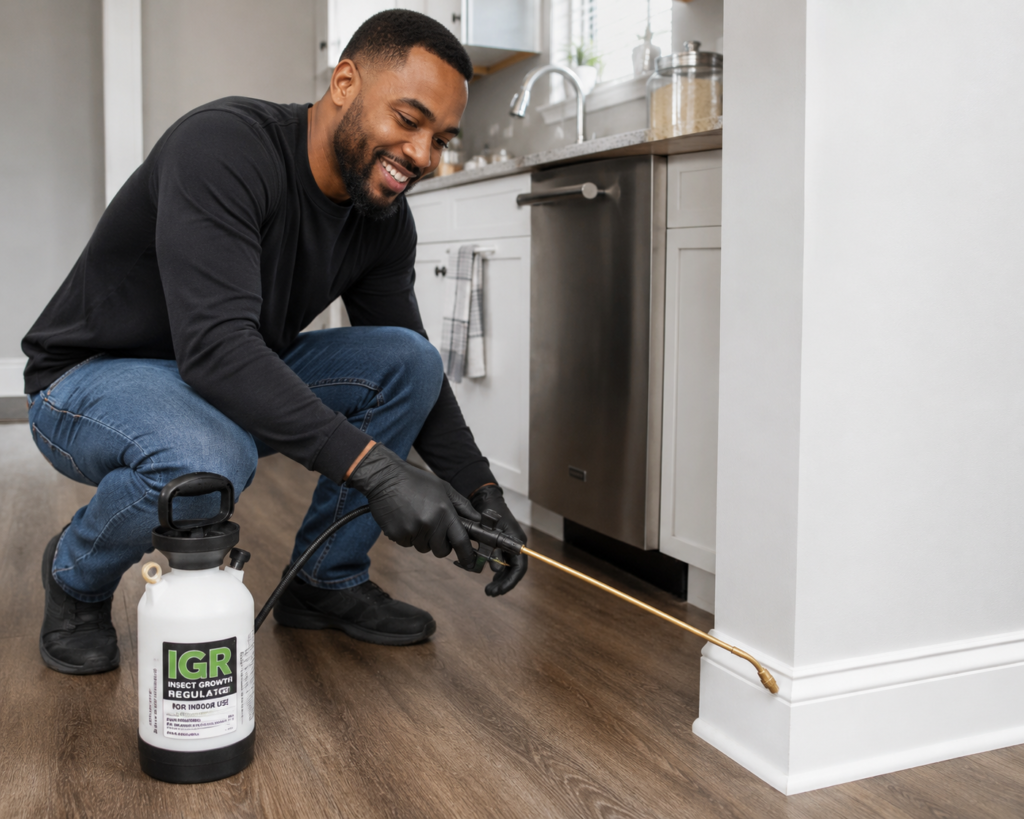
Place IGRs where roaches actually live, not where you see them run. Deep in harborage: behind and under appliances, inside the motor void of the fridge, along the backs of cabinets and drawer tracks, near plumbing penetrations. The point is to saturate the breeding zone with the hormone signal, so every developing nymph is exposed.
Run the IGR as Part of a System
An IGR is a force multiplier, not a standalone kill. On its own it won’t drop your current adult population. It sterilizes the future while the present keeps crawling. Paired correctly, it’s the piece that makes elimination permanent instead of temporary:
- Bait carries the kill. A gel bait rotation across distinct Modes of Action takes down the existing adults and nymphs.
- The IGR caps the ceiling. Running simultaneously, it guarantees the survivors can’t out-breed your bait. The population can only shrink.
- Sanitation and exclusion starve the rebuild. Cut the food, water, and harborage so the weakened colony has nothing to recover on.
The Verdict
Roaches win the long game by out-breeding your chemicals. An IGR takes that game away from them. It doesn’t matter how resistant the colony has become to your spray. A sterile roach and a nymph that can’t grow up are dead ends no matter what enzymes they carry. Bait to kill the present, IGR to erase the future, sanitation to deny the rebuild. That’s not three tricks. That’s the system that closes the hole in the boat.
The Roach Doctrine lays out the exact IGR-plus-bait pairing, the placement map, and the treatment timeline that turns a temporary knockdown into a permanent collapse. Enter the Doctrine, or start with the free field intel.
Sources
- National Pesticide Information Center (NPIC). Pyriproxyfen General Fact Sheet. View fact sheet
- National Pesticide Information Center (NPIC). Hydroprene General Fact Sheet. View fact sheet
- Review of insecticide resistance mechanisms and mode-of-action rotation. Toxics (MDPI, 2025). View review
Related Intel
- The Science of the Spray: Defeating the Super-Cockroach
- Understanding Metabolic Resistance: The Biochemical Armor of the Super-Roach
- Why Your Roach Bait Stopped Working: The Glucose Aversion Problem
Frequently Asked Questions
What does an insect growth regulator (IGR) actually do?
It doesn’t kill on contact. It mimics juvenile hormone, the signal that keeps a roach immature, so nymphs can’t mature into breeders and exposed adults go sterile. It shuts down the colony’s ability to replace itself.
Why do my roaches keep coming back after spraying?
Spray reaches adults and older nymphs but not the egg capsules. The ootheca’s hard shell shields the developing nymphs. The colony reloads from a generation your chemicals never touched. Killing adults faster is bailing a boat without plugging the hole.
Do IGRs work on resistant super-cockroaches?
Yes. That’s their edge. Resistance is built to neutralize neurotoxic sprays; IGRs attack a completely different target (development, a hormonal pathway), walking straight past the chemical armor that defeats everything else.
Which IGR should I use?
Three field-proven actives: pyriproxyfen, hydroprene, and novaluron. Any of them disrupts the molt into a breeding adult. Placement into and around harborages matters more than brand.
Can I just use an IGR by itself?
No. It’s a force multiplier, not a solo act. It sterilizes the colony but works slowly and won’t knock down the current adults. Run it alongside a bait rotation: the bait kills what’s here now, the IGR guarantees nothing replaces it.